

Professionalism At Its Best
House & Building Demolition In Hampton Roads, VA
Suffolk, Great Bridge, and Surrounding Neighborhoods.
Gipp Solutions provides house and building demolition across Suffolk, Hampton Roads, and nearby areas. We remove old homes, damaged structures, and unwanted buildings.
We’ll Tackle Any Job.
Expert Demo at a Reasonable Price
Gipp Solutions keeps structure demolition simple from the first call. We look at the building, access, debris, and cleanup needs before giving you a clear estimate, so there are no surprises when the work begins.
Request a Quote
Ready to Work Together? Fill in your info below!

Why Choose Us
From the initial estimate through haul-away and cleanup, we streamline everything and keep you updated on progress along the way.
01.
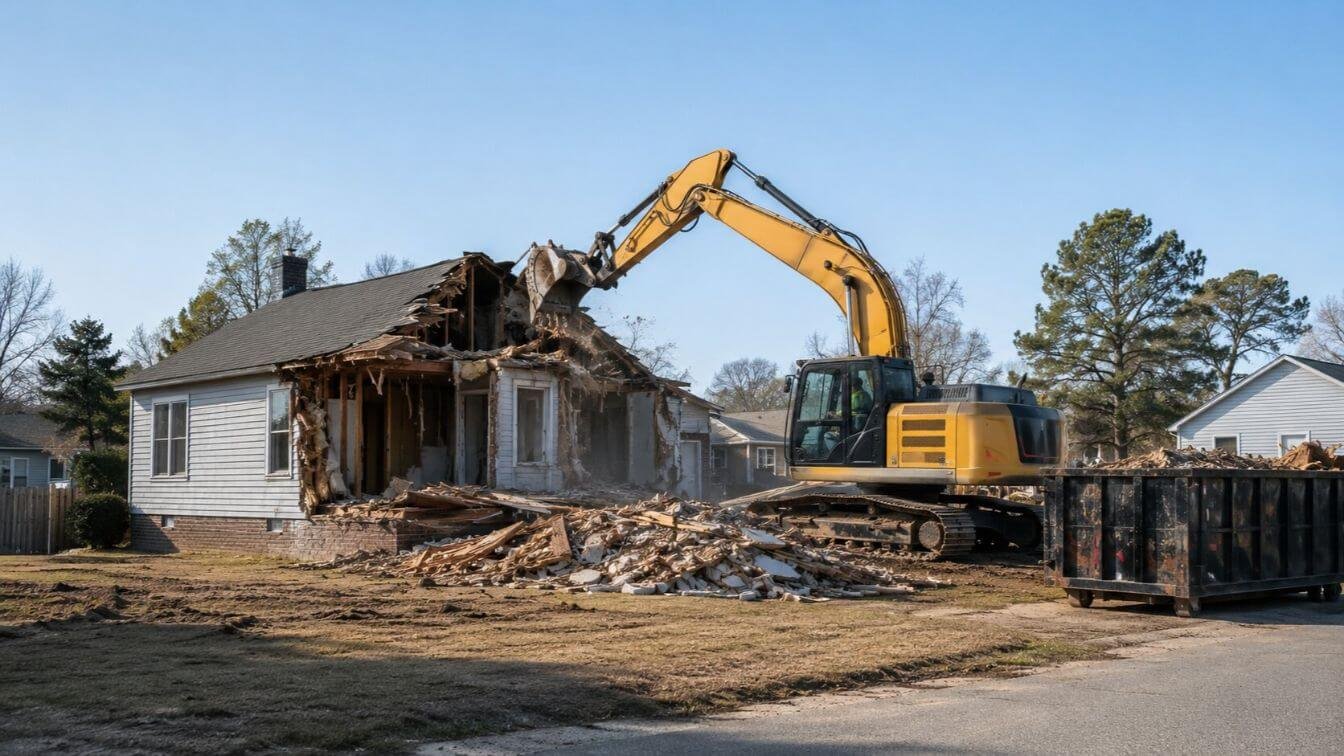
Whole House Demolition
Whole house demolition calls for an appropriate plan before equipment ever reaches the structure. We look at the building layout, utility status, access points, foundation, nearby surfaces, and debris volume so the job can move safely and efficiently. Whether it’s an older home, storm-damaged house, unsafe residential structure, or property being cleared for future use, our team brings the equipment and site awareness needed to take the structure down, load the debris, and leave the area ready for the next phase of work without dragging out the job.
02.
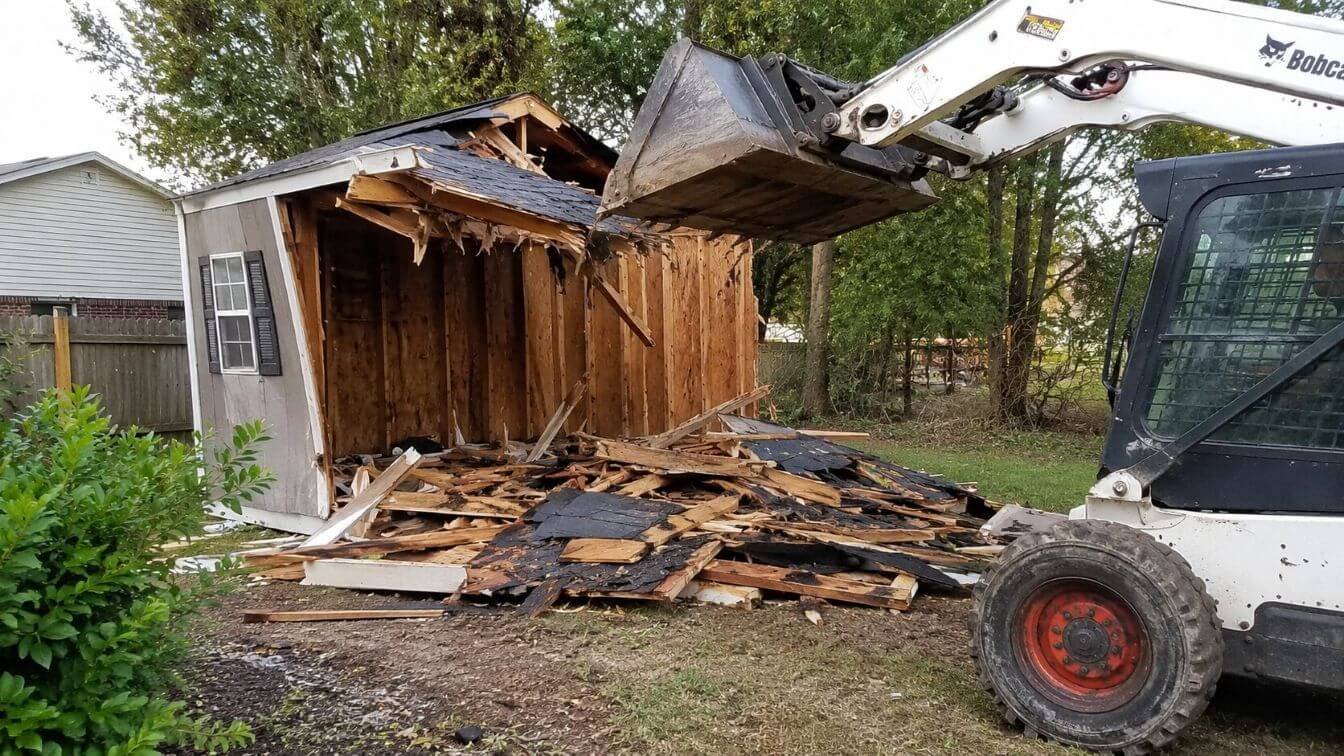
Small Building Demolition
Small building demolition covers older detached structures, worn-out accessory buildings, damaged additions, garages, and other residential buildings that need to be cleared from the property. These projects often involve tight access, fences, driveways, trees, neighboring structures, and mixed materials that affect how the work should be approached. We plan the removal around the layout of the site, complete the teardown in a controlled way, and clean up the remaining debris so the space can be used again without extra cleanup delays.
Post-Demolition Site Cleanup
After demolition, the site needs to be cleared for future use. We remove leftover debris, scattered material, and rough jobsite waste from the structure removal process, then leave the area cleaner and easier to access for repairs, grading, rebuilding, or future use.
03.
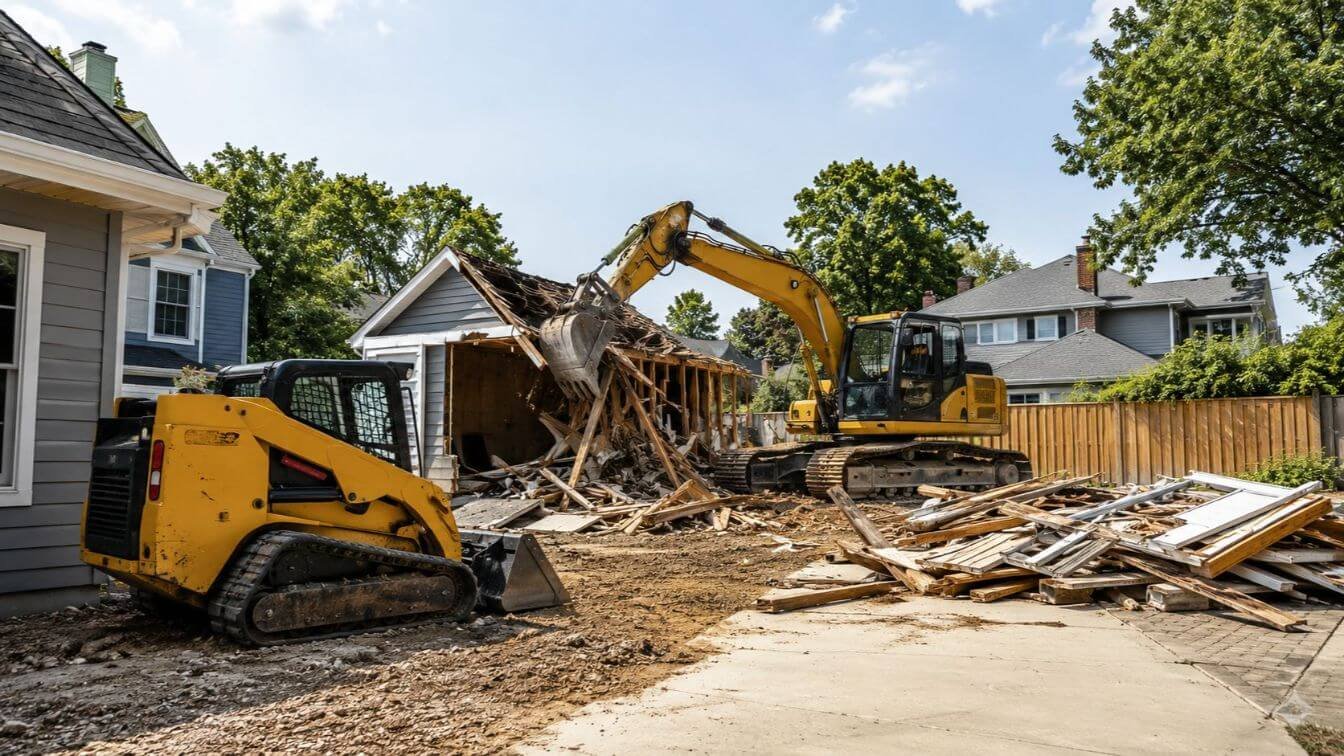
Damaged Structure Removal
Damaged structure removal needs the right plan because fire damage, storm damage, rot, water intrusion, age, and long-term wear can change how a building comes apart. We look at the condition of the framing, roof, siding, floors, foundation, and nearby property before removal starts. Whether the structure is partially damaged, unsafe, leaning, or too far gone to repair, our team works through the job with the right equipment, controlled teardown methods, debris loading, and cleanup support from start to finish.
04.
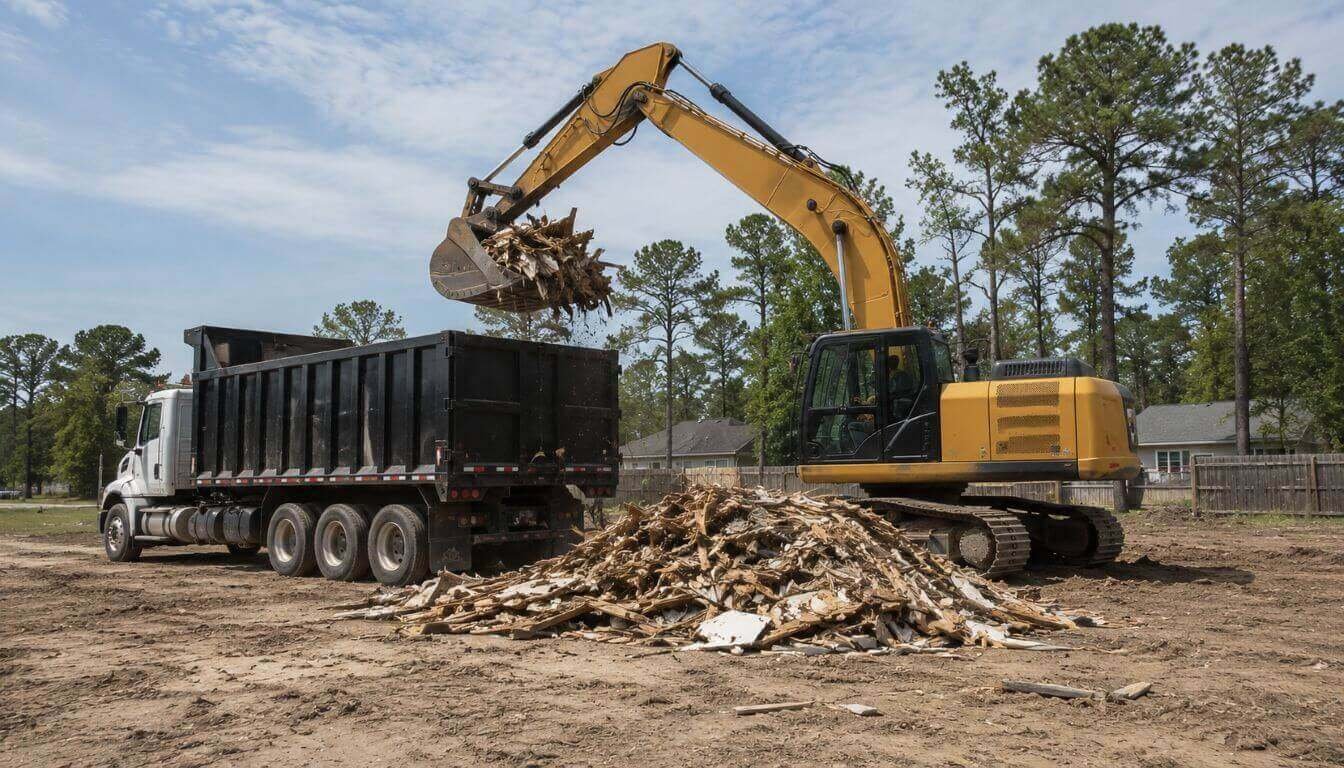
Demolition Debris Hauling
Demolition debris hauling keeps the project moving after the structure comes down. Old framing, shingles, siding, drywall, insulation, concrete, block, metal, and mixed debris can pile up fast if the haul-off isn’t planned ahead of time. We load and remove the leftover material so the property isn’t left with scattered debris, rough piles, or unusable space. Once the teardown is complete, our cleanup work helps prepare the site for repairs, rebuilding, grading, resale, or future property use.
Recent Work
Completed Projects
Mobile Home
Suffolk, VA
Site Clearing
Suffolk, VA
Debris Cleanup
Virginia Beach, VA
Land Clearing
Suffolk, VA
Have a Question?
House & Building Demolition FAQs
House and building demolition comes with different concerns than a small removal job. These answers cover structural condition, access, nearby property features, foundation areas, debris, and what can affect how a teardown is planned.
Yes. Older homes often have weakened framing, aging roofing, old additions, damaged flooring, or materials that need extra care during teardown.
We review the condition of the structure before work begins so the demolition plan fits the building and the property around it.
Yes. We can remove small buildings, detached structures, storage buildings, older outbuildings, and similar residential structures.
The approach depends on the size of the building, how it sits on the property, nearby obstacles, and how much material needs to be hauled away.
Yes. If a structure is unstable, partially collapsed, fire damaged, storm damaged, or unsafe to walk through, we can review the project from the outside and plan the safest practical approach.
These jobs often require more careful equipment placement and site awareness.
Tight spaces are common in residential demolition. When a building sits close to fencing, driveways, trees, neighboring homes, sheds, garages, or other property features, we look at access and working space before starting.
That helps us plan the teardown and reduce unnecessary property disruption.
Some structure demolition projects involve foundation edges, piers, steps, porches, attached concrete, or slab areas that need to be reviewed as part of the scope.
What gets removed depends on the project goal, the property condition, and what needs to happen after the building is down.
Yes. Many house and building demolition projects are done because the property needs to move into a new phase.
That may include clearing an old structure before a sale, preparing for future construction, removing a damaged building, or opening up the lot for a different use.
Working space depends on the size of the structure, equipment access, debris location, nearby surfaces, and the layout of the property.
Some jobs have wide-open access, while others require a tighter plan around driveways, fences, trees, or neighboring structures. We review those details before recommending the best approach.